
YA Author Website Tips: 6 Ways to Engage Your Audience
Last updated 22 June 2025
Written by Jin Wang
If you’re building a YA author website, you’ll want it to capture the attention of both teen and adult readers. Here’s how to make it pop.
YA is a fascinating genre. It’s marketed toward young adults, and yet more adults than teens read YA (accounting for 55% of today’s YA readers). It’s defined by coming-of-age themes, yet it’s not afraid to bleed into fantasy, romance, sci-fi, and socio-realistic fiction. As young adult fiction is beloved by both teens and adults — and a great YA author website helps bring those stories to life online.
So how should websites for YA authors be designed to accommodate this exciting genre and engage their diverse readership?
Table of Contents
1. Use Visuals to Boost Your YA Author Website
YA readers are very active on social networks. This doesn’t just include the 55% of adult readers, but also the other half of millennial teens who’ve grown up knowing nothing but TikTok, Twitter/X, Snapchat, Instagram, and Facebook when it comes to the web. What these social media platforms have in common is a heavy emphasis on visual content, keeping text to bite-size lengths.

Jodi McAlister
The YA author website we launched for Jodi features a book stack concept. Large visuals of book covers with clear navigation to academic and fiction works. Design makes immediate genre and tone clear—romance and YA—with clean layout and prominent menu.
It’s all about large images and videos vying for the attention of users in a constantly flowing stream of information. The context of web browsing for YA readers is shaped by this environment, so your website should be too. This will ensure your website is engaging and attention-grabbing.
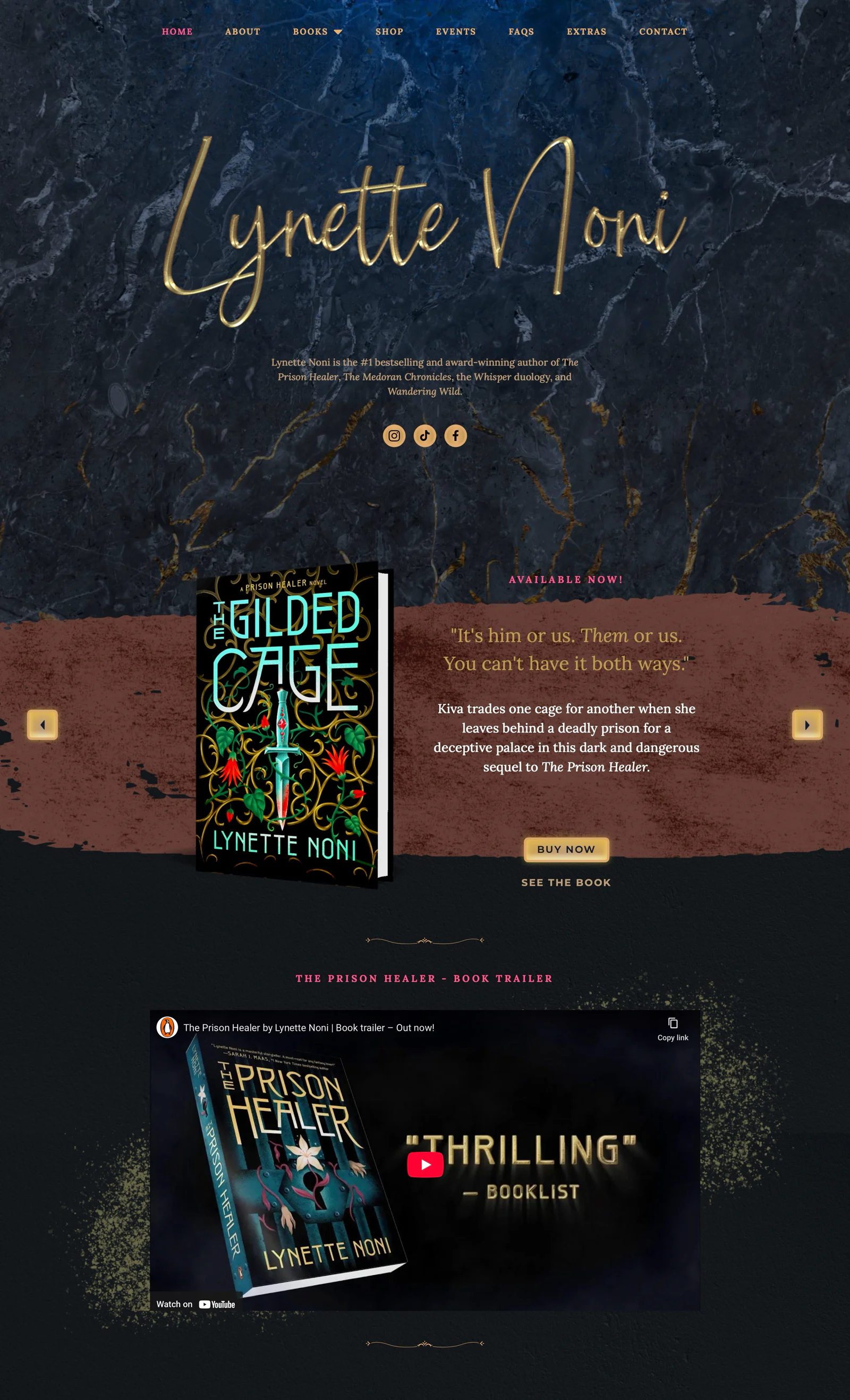
Lynette Noni
Bestselling YA fantasy author Lynette Noni captivates readers with intricate world-building.
We designed immersive hero banners for each series, overlaid with release timelines. Her site is optimized for mobile, ensuring dramatic visuals load crisply on any device.
2. Speak the visual language of social media
It’s also worth paying attention to the visual language social media platforms create. For example, many visitors use social media on their smartphones, which has created an ingrained logic of scrolling and swiping. As users scroll vertically through a webpage, like a Facebook feed, they’re exploring – trying to find new content to engage their attention. But as users begin to swipe across horizontally, like through a Facebook photo album, they’re looking to connect – wanting to find out more, or similar content. Incorporating visual language like this into your website – especially on mobile – will make navigation more intuitive.
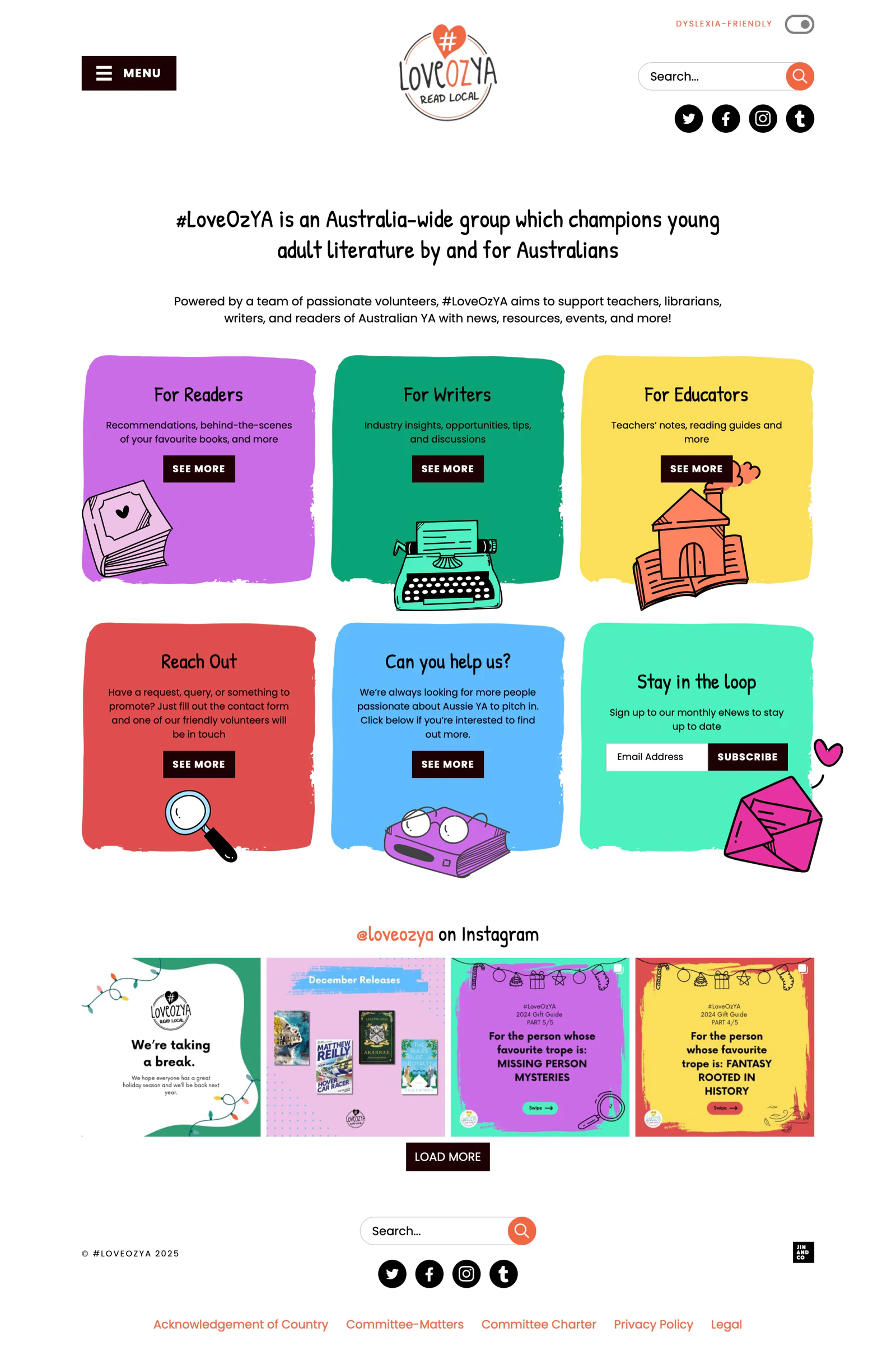
#LoveOzYA
A delightful community resource championing Australian YA, teachers, and librarians. We used colorful, dyslexia-friendly, and content-rich—with intuitive sections for Readers, Writers, Educators—plus visually engaging booklists and events pages.
Use an FAQ on your about page
The logic of question and response is also prevalent on social media. Think of the comment and reply functions on Facebook, YouTube, and Twitter, or the popularity of the Q and A “AMA: Ask me Anything” threads on Reddit. You might like to think about using the question-and-answer format of an FAQ alongside or in place of your about/bio page.
Some great FAQ pages include those of Rainbow Rowell, Karen Tayleur, Fiona Wood, and John Green.

Fiona Wood
Award-winning YA author Fiona Wood writes about resilience and real-world issues.
Her FAQ-style about page uses collapsible sections—echoing her no-nonsense writing style. We balanced text with bold imagery to ensure clarity and depth while keeping navigation intuitive
3. Social Media Integration for YA Author Websites
As has already been mentioned, YA readers are very active on social media. A well-designed YA author website helps connect with a visual-first, socially active reader base. Therefore, your social media should work on your website, and your website should work on your social media. As is the standard, your website should include links to all of your social media accounts, and therefore act as a hub for your entire online presence. Another way to make your social media work on your website is to include live, updating social feeds.

Susan White
Susan White explores identity and culture with sincerity. For Susan’s YA author website, we developed a clean, minimalist design highlighting event announcements and media quotes, boosting credibility. The calm palette reflects her contemplative tone.
Something that website owners tend to think about less is how your website works on social media. One way to do this is to create ‘share buttons’ on each of your pages to make sharing easy.
With optimisation, content from your website will look much more engaging and attention grabbing when it is shared and recommended by others, like this:
If you want to learn how to edit ‘meta-tags’ (don’t worry, it’s easy!): 12 Book Page SEO Tips to Help Readers Find You On Google
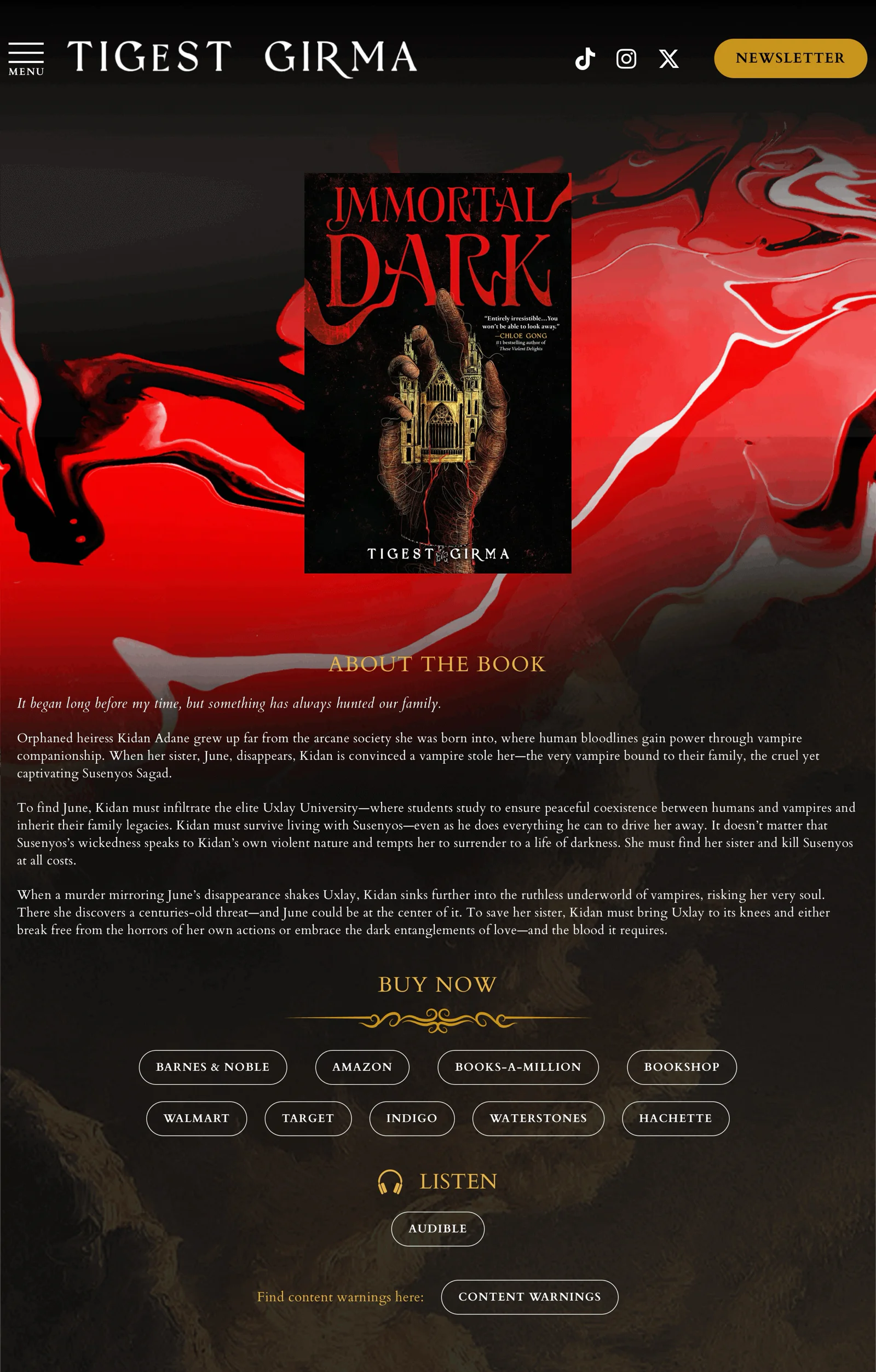
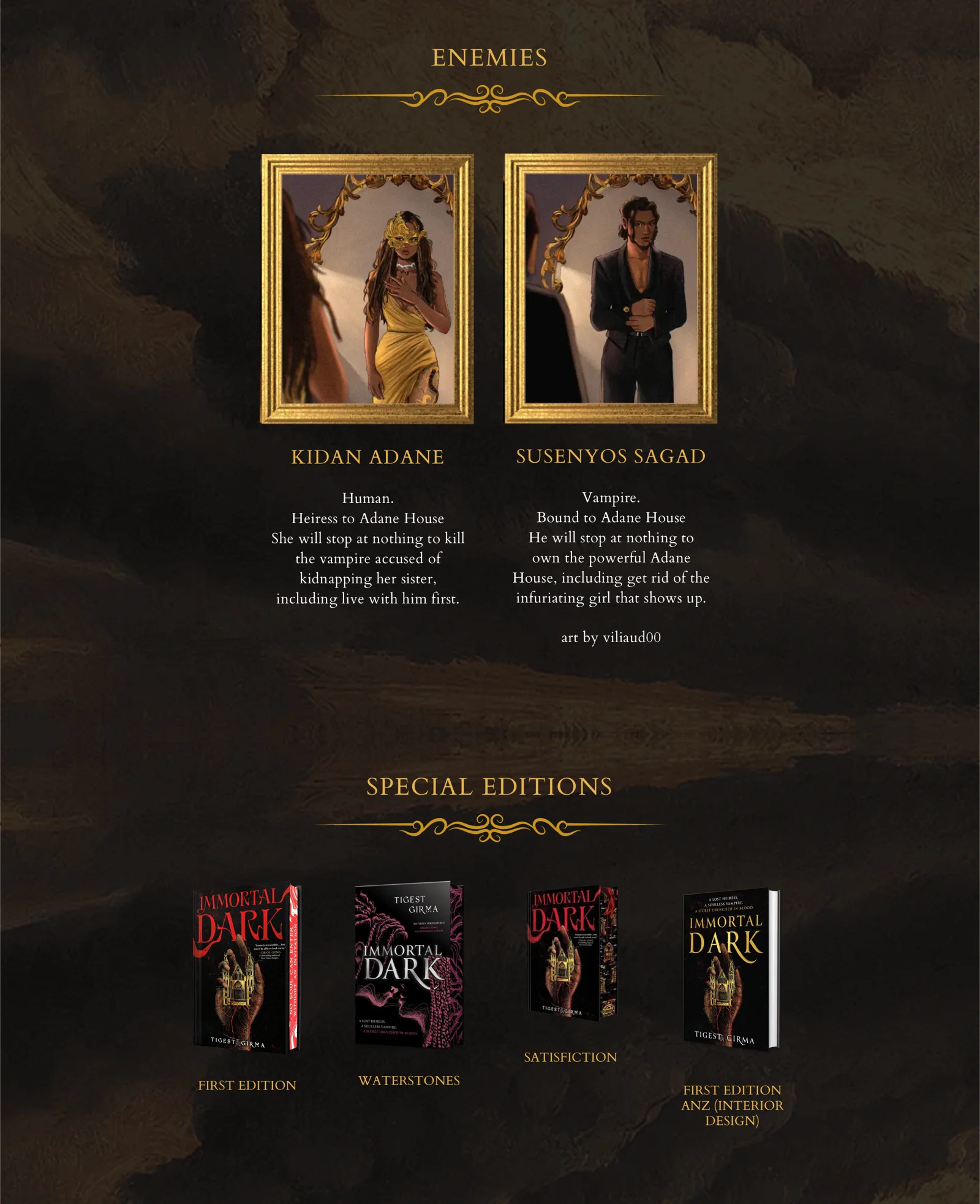
Tigest Girma
Emerging YA voice focused on diverse characters and cultural nuance.
We used bold typography and a dynamic mosaic layout to feature debut titles and event reels, underpinned by a culturally rich visual style.
Link to purchase your e-book
Your website offers a great resource for accessing the digital versions of your books. It’s important to do this on your website, as more than 40% of YA consumers read e-books.
4. Offer unique content that you can’t in a book
As a medium for communication, a website offers a wider range of ways to engage with your audiences than a book. For any young adult author website, it’s important to integrate visuals, social feeds, and mobile-friendly features.

Kaz Cooke
For iconic Australian author Kaz Cooke—creator of the beloved Up the Duff, we designed a lively, bookshelf style homepage, showcasing blog–style articles and FAQ for her parenting and YA audiences. Her youthful, bubbly color palette echoes her authoritative yet warm voice.
Glossary of Terminology
This can of course be included in the index of a book, but you can’t ctrl-f a book! Check out Rachael Craw’s one.
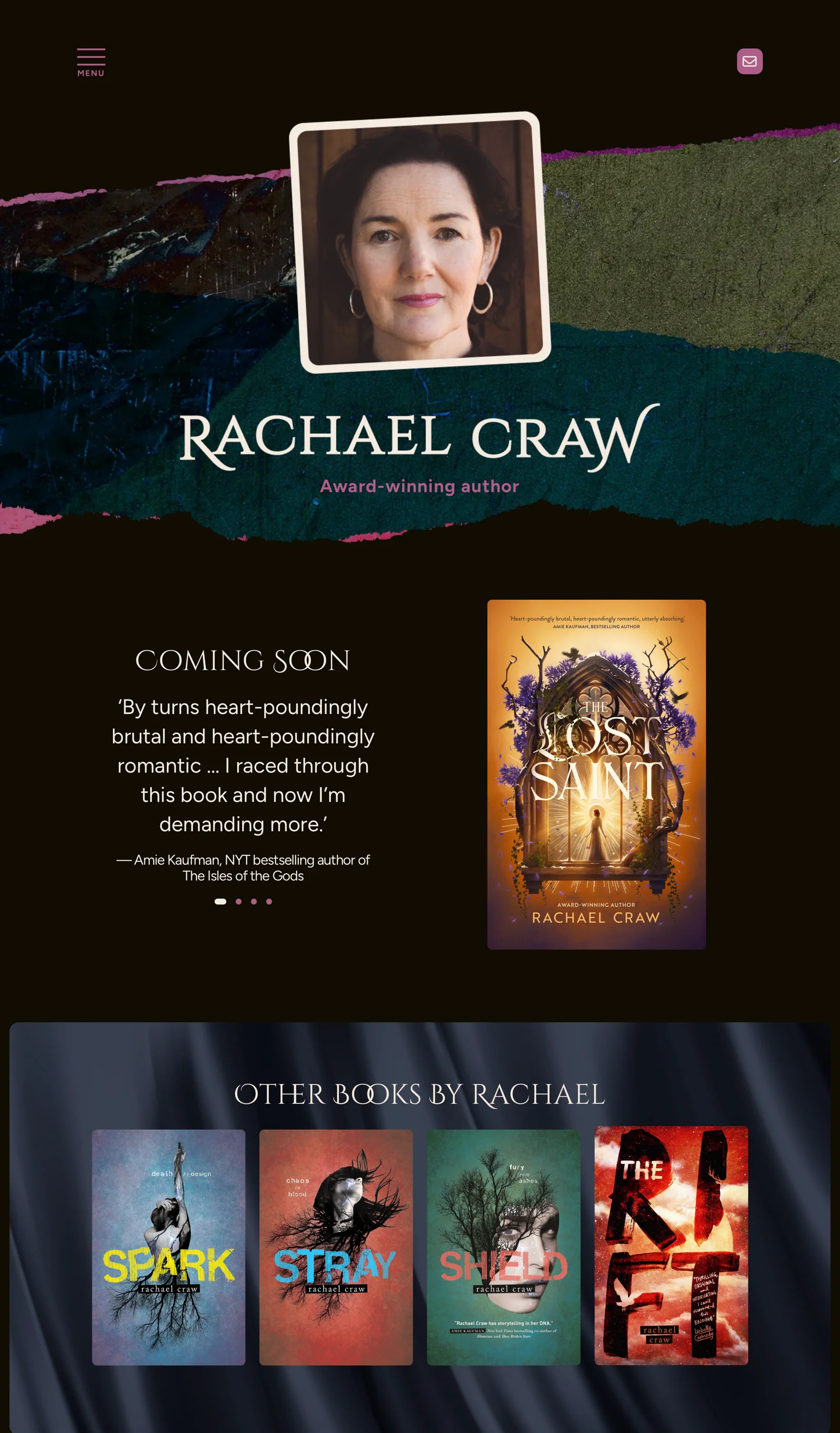
Rachael Craw
The YA author website we launched for Rachael showcases her YA titles with Spotify soundtracks and Goodreads integration . Her site is immersive with music, visuals, and easy-to-navigate book links—rich sensory experience.
Related things you can offer include short stories, sneak peaks, content from your book that didn’t ‘make the cut’, or book recommendations.
How To Use Video In YA Author Websites
Book trailers are a great addition to your website, and adds a moving part to your website to keep it visually attention-grabbing. If you’re thinking about making one yourself, check out the article I wrote on the subject.
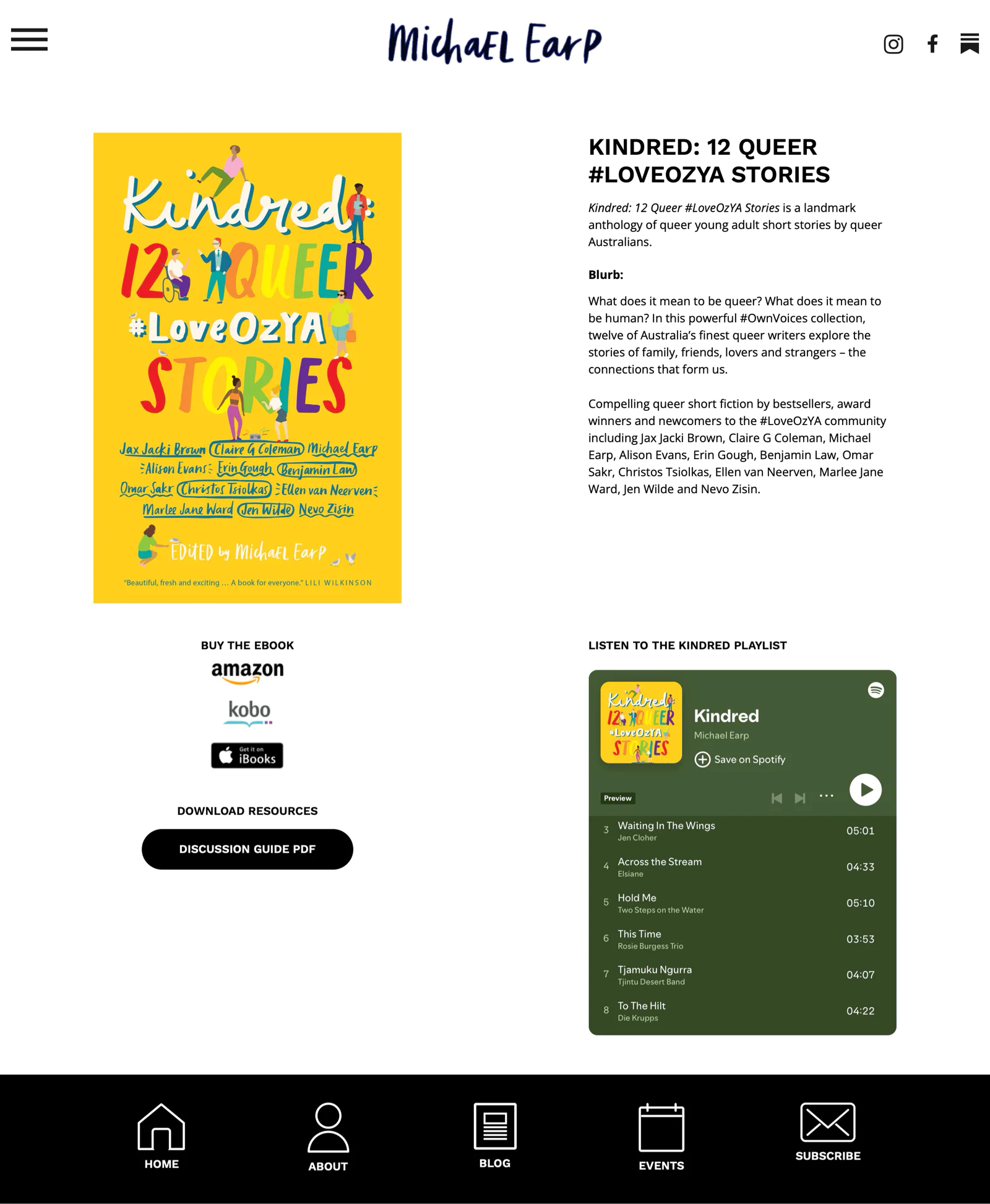
Michael Earp
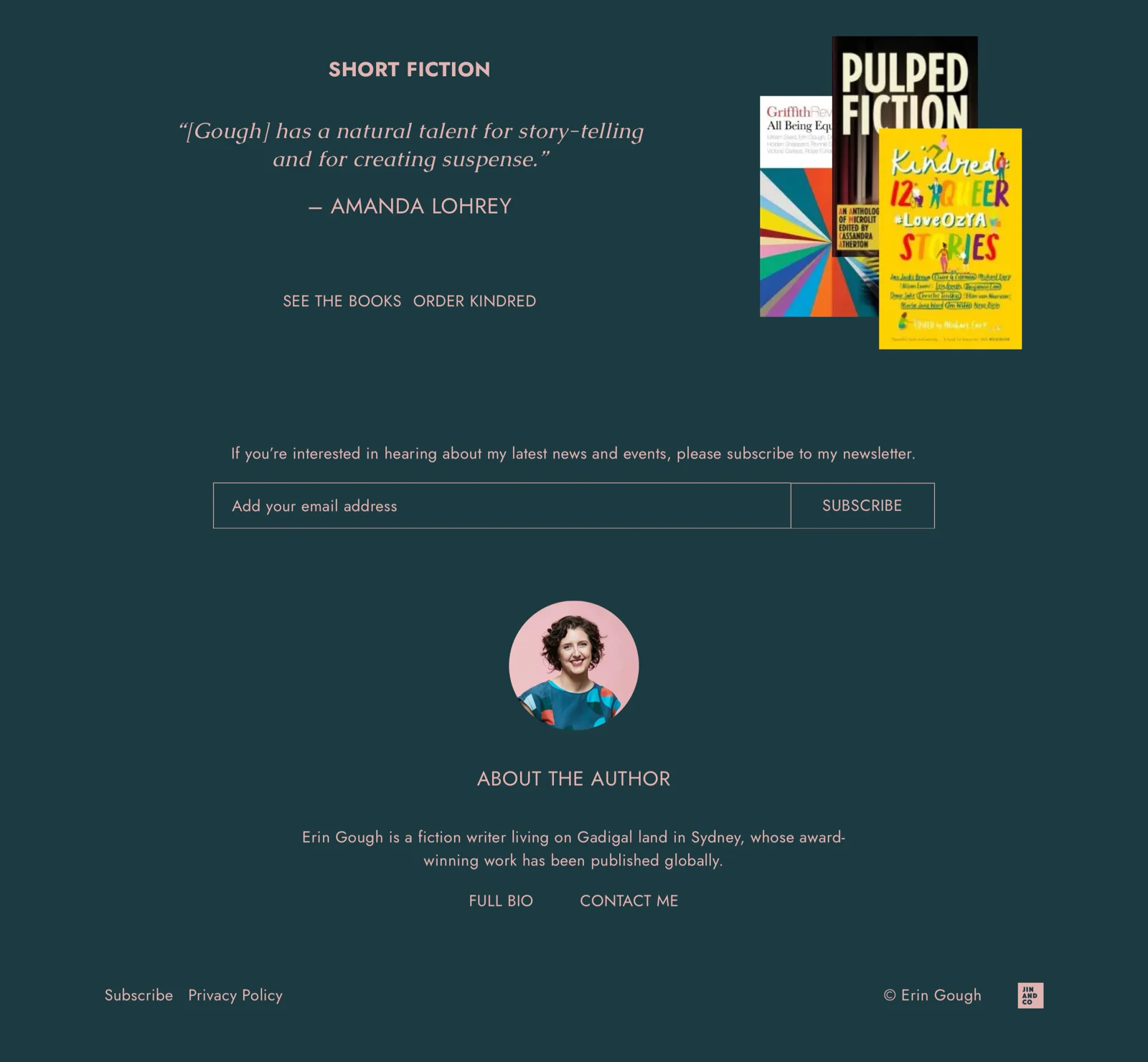
Michael writes authentic, socially conscious YA novels. We built a sleek ‘flip card’ hybrid layout with modules for event listings, book blurbs, and his YA anthologies voice (“Kindred”). The design feels purposeful and engaged. Michael has embedded a Spotify Playlist of songs that tie in to the Kindred Anthology.
Music For Young Audult Readers
A soundtrack is a great way to give emotional context to your YA book, and reveal the personality behind the pen. A simple way to add this element to your website is through embedding a Spotify playlist.
Or, you can go a step further, like Emily Gale, who produced an original song for her book ‘The Other side of Summer’ performed by Tim Reid and Emma Heeney. Tim offers a guitar tutorial to learn some of the basic chords and strumming techniques. The lyrics and guitar chords are also in the back of the book.
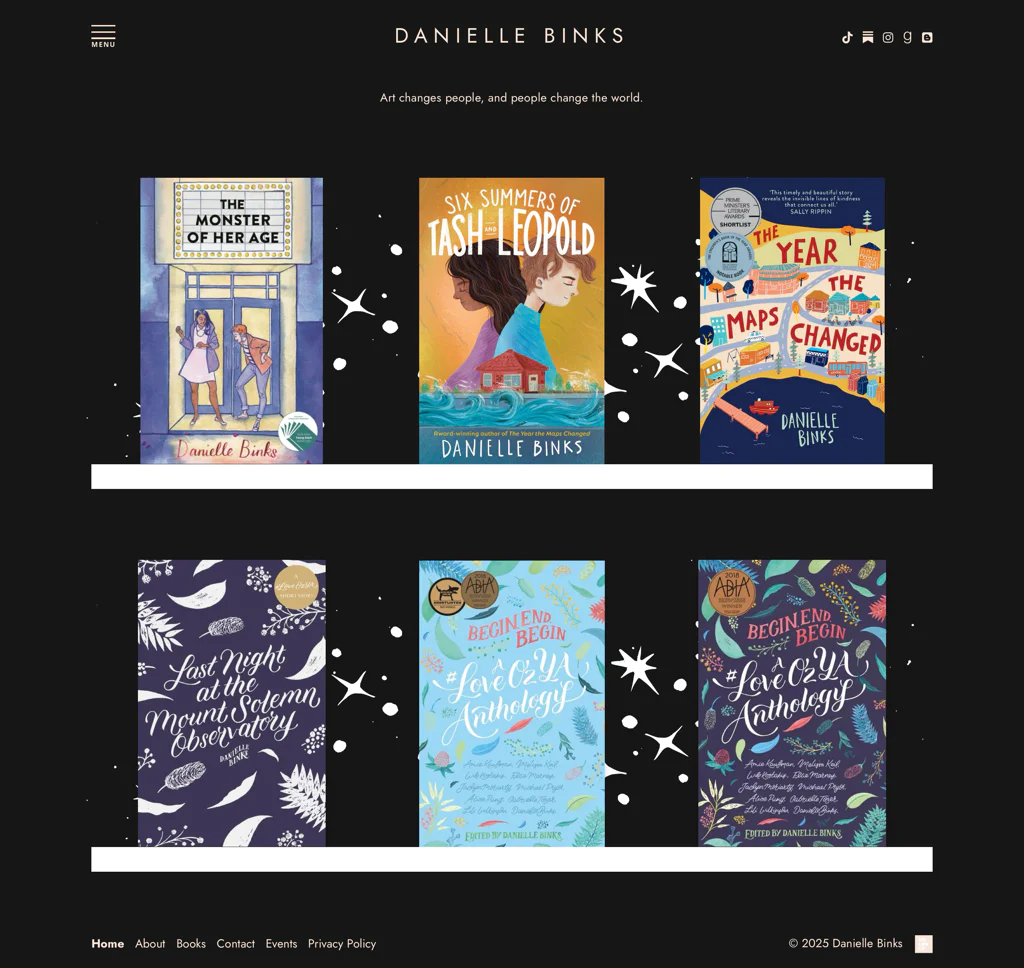
Danielle Binks
Her site features playful typography and informal tone. We used a shelf concept to showcase her books and mirror her writing voice and resonate with teen and adult readers alike.
Start An Email Newsletter
Your website is the best way to collect your readers’ emails, and, in my opinion, email is the best way to stay in touch with your socially active fans. You might like to think about running a giveaway in order to build your mailing list and create more loyal fans.
5. Display speaking events and appearances
Teachers in schools are always looking to book speakers, and your most loyal fans, both teen and adult, look forward to your events like book signings whenever you’re in town. A calendar of your appearances and events on your website helps these kinds of visitors stay on track with what you’re doing.
School-speaking events are often tied to a theme or part of the curriculum. Librarians also book authors across year levels. Show teachers and librarians how your book and workshop, align with what schools are doing, and what year levels it would be suited to.
Kare Comer
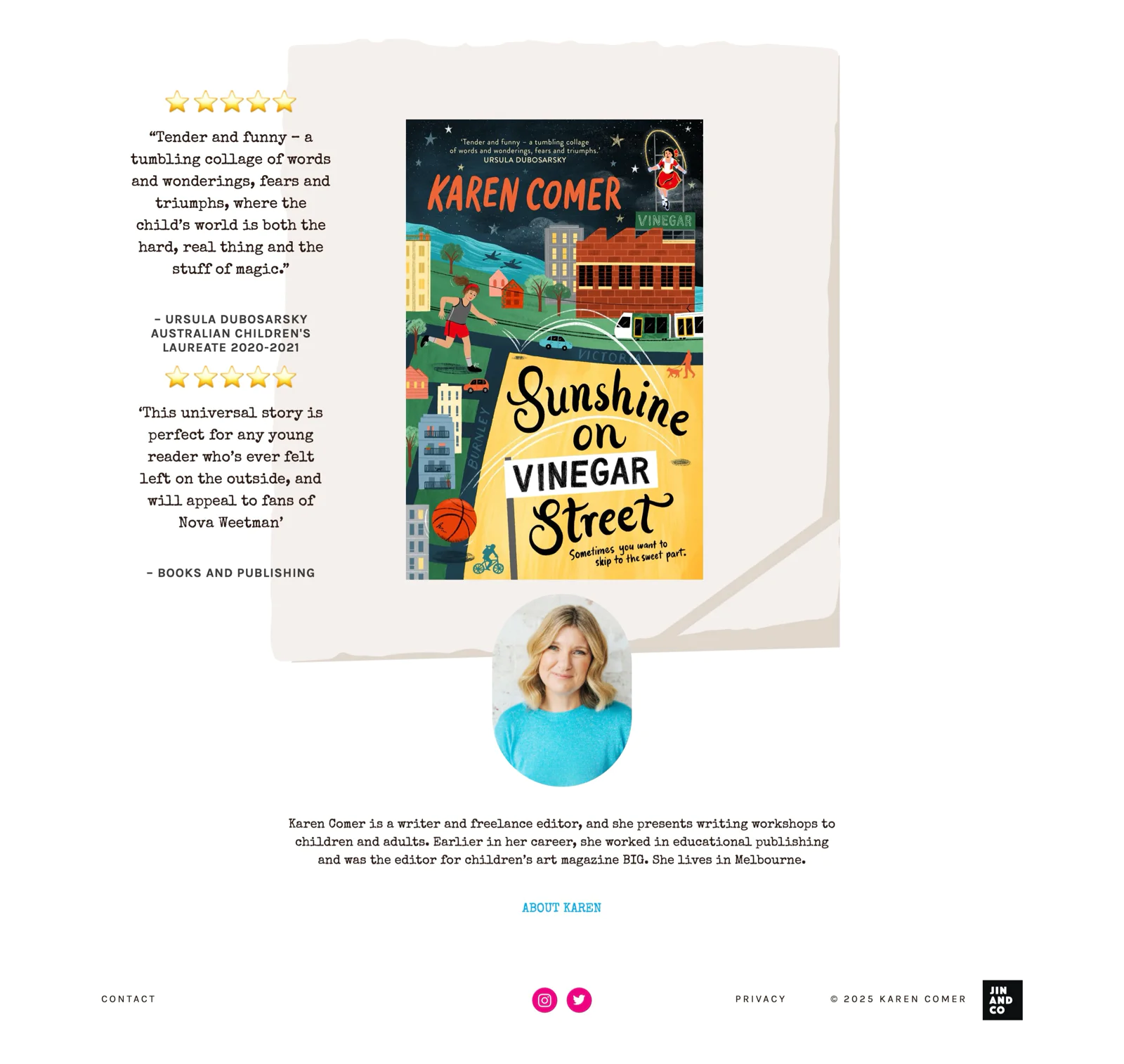
Aussie YA author, Karen Comer, writes emotionally compelling YA centered on coming-of-age. Here we developed the “Books” section features layered book covers over soft color blocks, reflecting her thematic depth. We framed her educator-visitor messaging clearly, making school booking easy.
Related articles
6. Cater to other YA authors
Another part of your website visitors is bound to be other YA authors. For them, your website might be an invaluable resource to help their writing, and their websites for yours. You may offer writing tips or insights into your writing process or sources of inspiration on your blog. Or, you can use your blog to host or take part in a YA book launch blog tour.
Vikki Wakefield
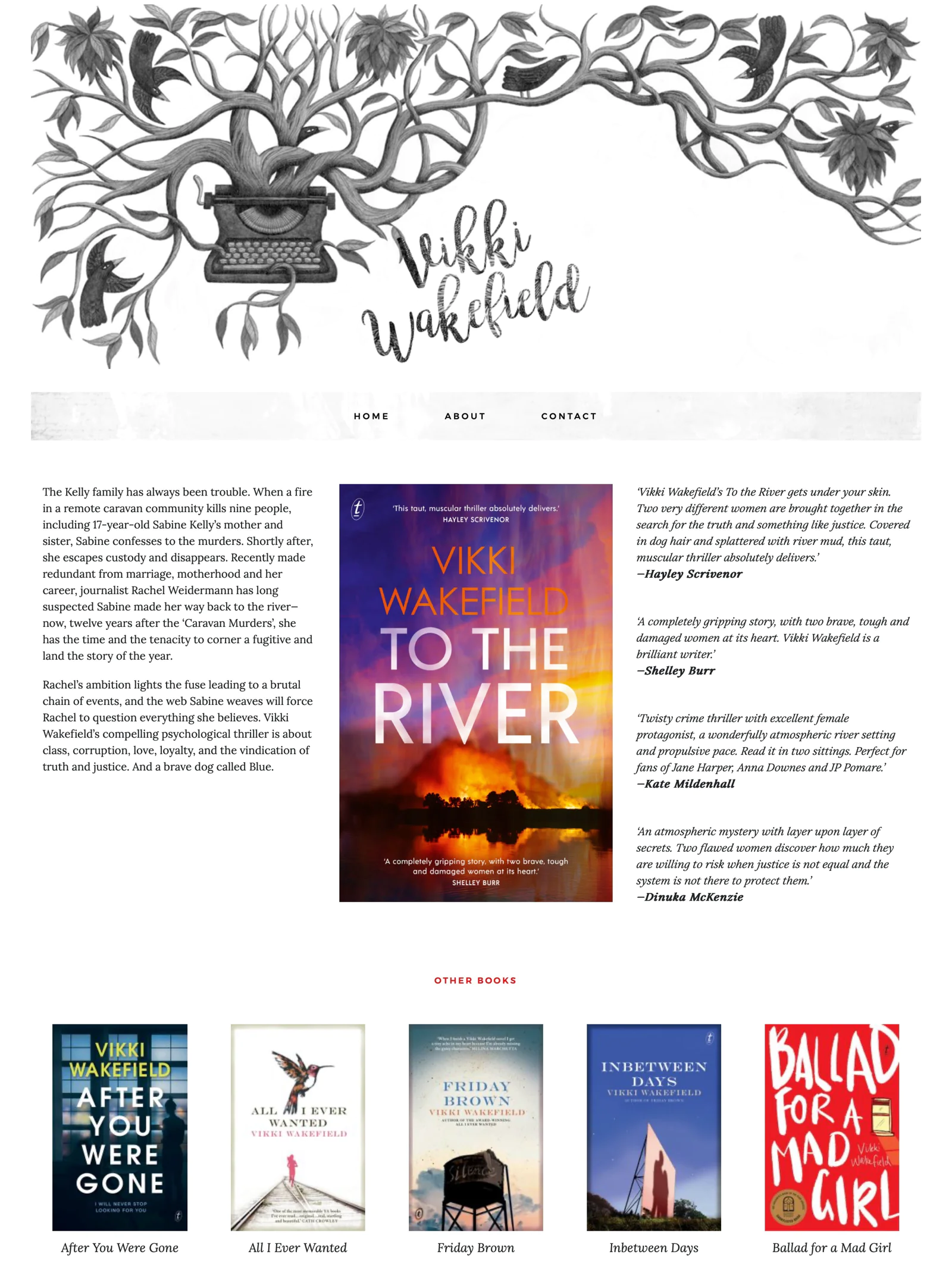
Award‑winning YA author Vikki Wakefield writes gritty, emotional fiction. For Vikki’s homepage we delivered a minimal approach with all of the key elements of an author website captured in one page with bold block layouts. We framed her latest book and other book covers prominently.
Summary of All Things YA Author Websites
- Relying on visuals more than text creates more engaging and attention-grabbing content on the social media-saturated web.
- Think about borrowing the visual language of social media, like how your website scrolls or swipes. An FAQ page is a good format for engagement.
- Your website should integrate with social media, and social media should integrate with your website. This provides an organic way for your website to constantly evolve and makes sharing from your website beautiful.
- Link to your ebooks on your YA author website
- Find ways to offer content on your website you can’t do in a book, including blog, video, and audio content.
- Cater to teachers, librarians, and loyal fans by displaying your speaking events and appearances.
- Don’t forget that your YA author website can be a valuable resource for other YA authors, and foster the YA community.
Whatever your style or audience, a strong YA author website can become your most powerful tool for engaging readers and growing your platform.