
10 Tips for a Standout Children’s Author Website
Last updated 22 June 2025
Written by Jin Wang

Build a great children's author website that connects with readers, parents, and schools. Discover 10 creative tips to make your site stand out.
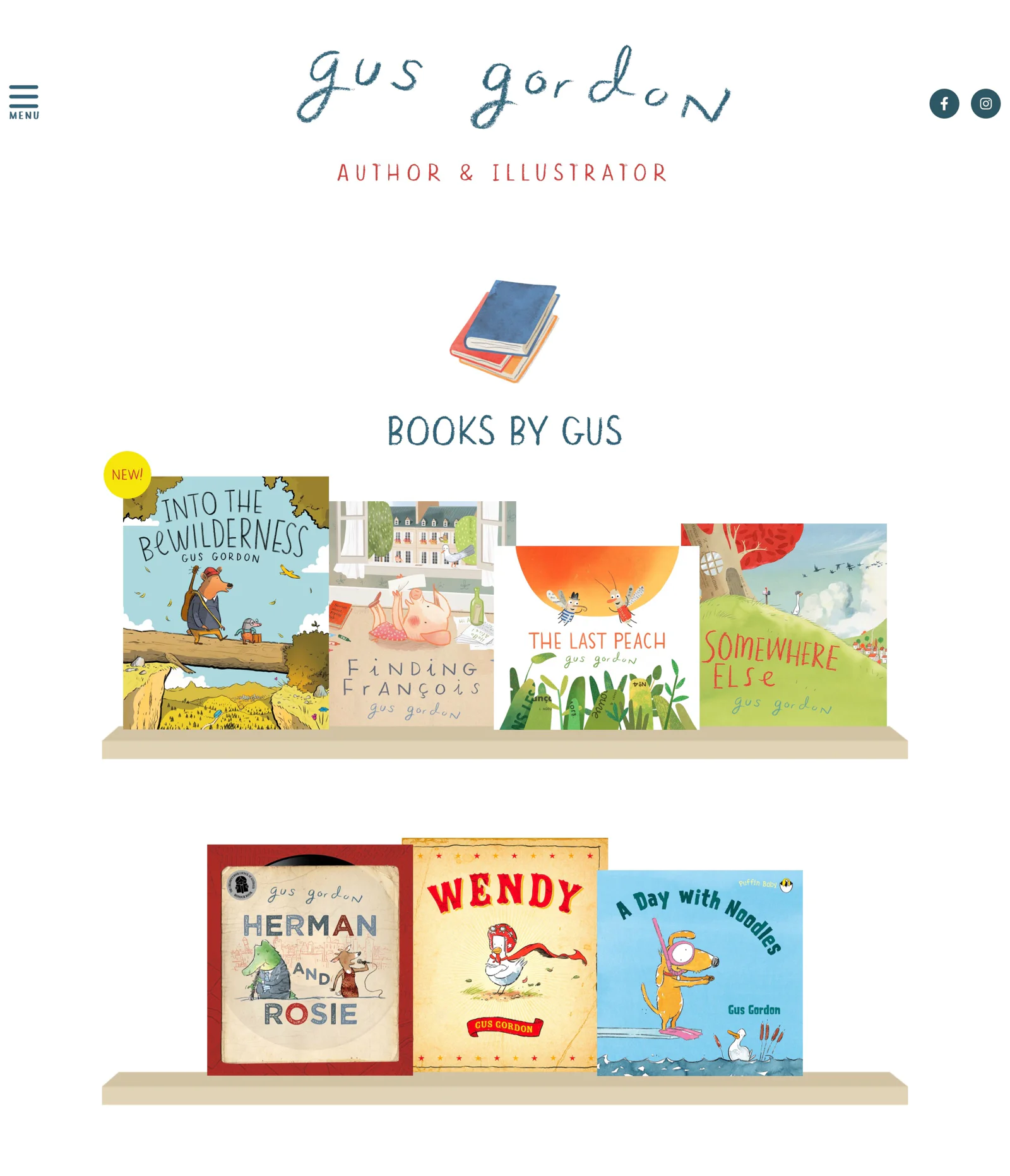
If you’re a children’s author or illustrator, your website needs to do more than just list your books. It should connect with kids, support your school visits, offer helpful info to parents and teachers, and reflect your creative personality.
Whether you’re just starting out or have dozens of books under your belt, here are 10 tips to help you build a children’s author website that truly works.
Table of Contents
1. Offer Freebies and Fun Extras for Kids
Children love discovering little extras. Add a section to your website with downloadable goodies: colouring pages, quizzes, printable bookmarks, bonus chapters, or bookplates. These simple additions give kids something to do beyond just reading, keeping them engaged and giving them a reason to return to your site.
Belinda Murrell is an award-winning children’s author of over 35 books. The additional content on her book pages allows kids and adults alike to dig deeper into her books.
Belinda makes available:
- Downloadable PDF chapter extracts
- Teachers’ Notes for class activities
- Shares her inspiration behind the stories
- Even a sound clip of a chapter reading

Try these:
- Include a secret code on her website to unlocked a hidden story.
- Offer printable masks based on her book characters
- Get creative and tie it back to your stories.

I recently spoke to Lian Tanner, author of The Keepers Trilogy, about her page dedicated to freebies for kids
“In my experience, kids really like extras – things like free bookplates, quizzes, bits of the story that didn’t make it into the final book etc.” Lian said. “It’s a way of engaging even more with a book or series they’ve loved, taking something away with them, providing a bit of story-after-the-story.”

2. Showcase Character Cards and Illustrations
Children respond strongly to visual storytelling. Bring your characters to life with illustrated cards, profiles, or even trading-style cards. Include brief, fun facts about each character to deepen the reader’s connection. For picture book authors and illustrators, this is a great chance to repurpose existing artwork.
Parents can also use these visuals to start conversations about your book or choose which titles to buy based on which characters their children are drawn to.
3. Make Your About Page Visual and Engaging
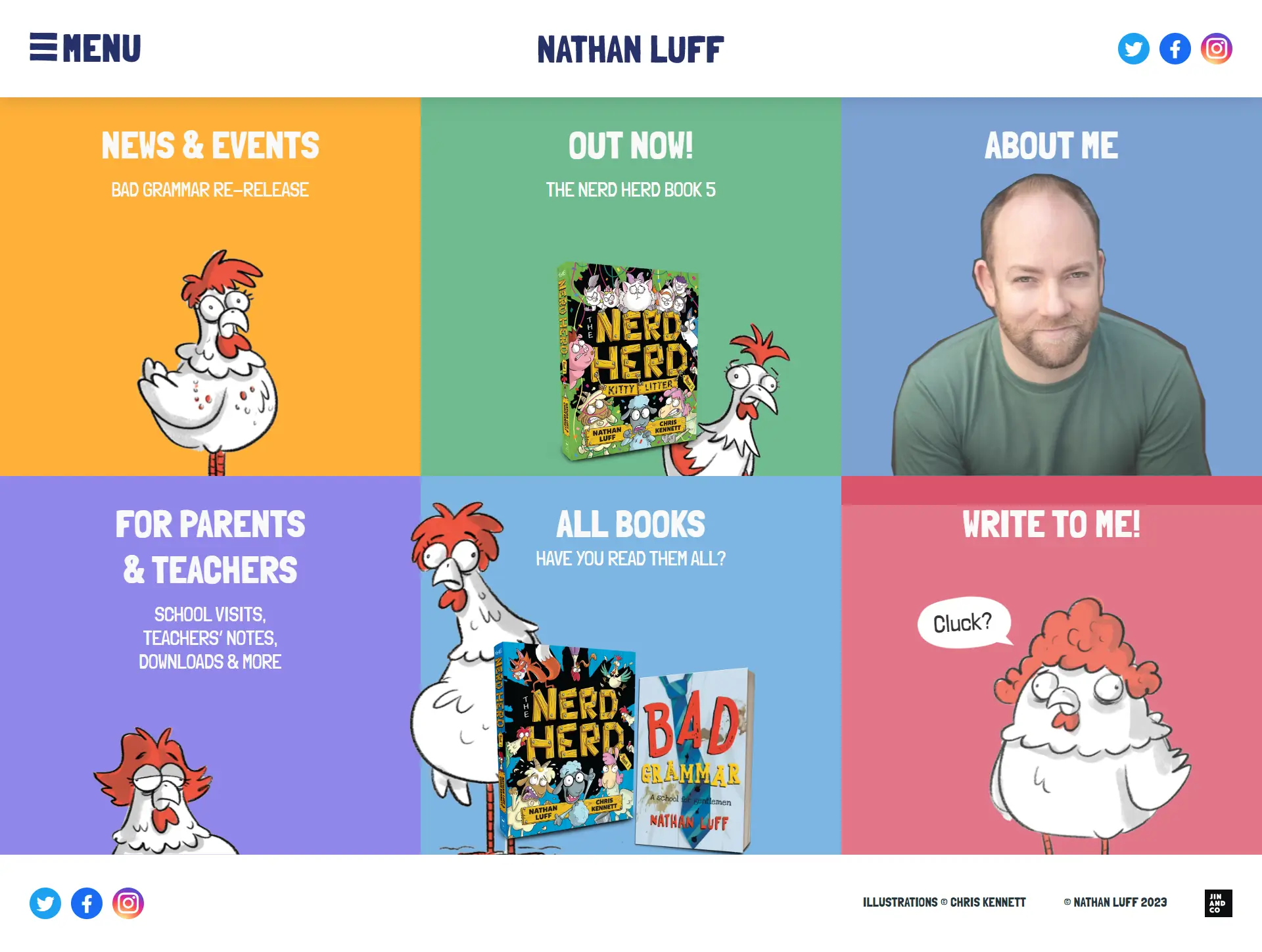
Don’t just write a bio — tell your story like you tell your books. Use personal photos, fun facts, or a timeline of your creative journey. Kids and adults alike want to know who you are, what you looked like as a child, what your writing space is like, or what inspired you to start writing.
For example: A children’s author included ‘Ten Silly Things About Me’ instead of a traditional bio. It was warm, funny, and helped readers remember her.
4. Include an FAQ Page for Curious Readers
Children are full of questions, and so are parents and teachers. Include an FAQ page that answers common questions:
- How do you come up with your ideas?
- Are your books based on real people?
- Do you visit schools?
- How old are your books suitable for?
Rainbow Rowell, author of the 2015 Inky Award shortlisted, Fangirl, has a brief ‘About’ page, but also uses a (humorous) ‘FAQ’ page to give fans snippets of trivia and links for further reading.
Here are more FAQ examples by Fiona Wood and G.J. Stroud

Use a friendly, conversational tone and keep answers concise. It helps avoid email overload and shows you’re open and accessible.
5. Feature Letters and Artwork from Kids
Many children’s authors receive messages, drawings, or photos from their young readers. Instead of letting them pile up in your inbox, celebrate them! Create a special section (with parent permission) that showcases their creativity. Kids love seeing their work displayed and it encourages others to participate.
Pro tip: Give the page a fun name like “Reader Gallery” or “Mail from My Fans.”
6. Promote School Visits with Purpose
If you offer school talks, workshops, or author visits, create a page dedicated to it. Teachers and librarians are busy — make it easy for them:
- List what year levels you speak to
- Include session types and curriculum links
- Add photos or testimonials from past visits
- Share downloadable info packs or pricing (if relevant)
Position this page as a helpful tool for educators, not just a promo.

Adelle Frittitta’s School Visits page is a standout example of how to make author incursions feel inspiring, curriculum-aligned, and easy to book. With three clearly structured options tailored to Foundation through Grade 6, her offerings aren’t just age-appropriate — they’re engaging, meaningful, and joyfully connected to themes of culture, family, and storytelling. Each session blends hands-on creativity with thoughtful reflection, making it easy for schools to see the educational value. The page itself is clear, warm, and action-oriented — from the free downloadable teacher’s notes to the no-commitment booking form, it’s a great model for any children’s author looking to connect with schools.
7. Share Behind-the-Scenes or Studio Content
Kids are endlessly curious about how books are made. Show them your sketchbooks, drafts, or a time-lapse of you illustrating a scene. Share photos of your workspace, research trips, or even mistakes made along the way.
Including your work–in–progress sketches, gives people a reason to ‘follow’ you, and offers insight into how you work. Give people access to your workspace. Melbourne-based author and Illustrator, Anne Ryan, produced a video to invite people into her studio. These features can make a children’s author website stand out.
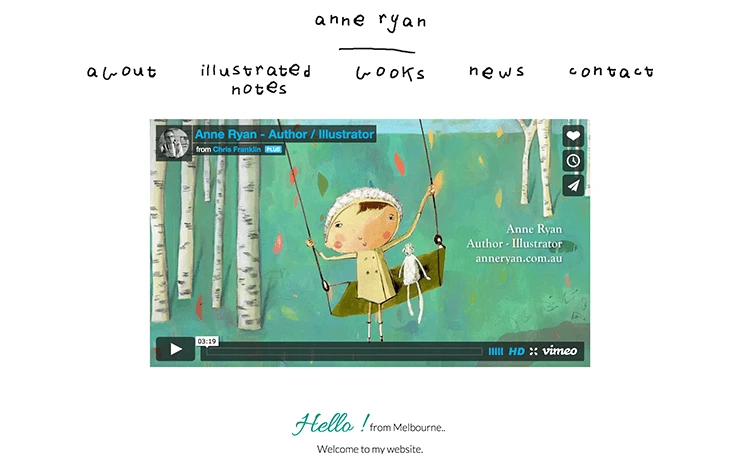
“I made the video to catch the publisher’s eye by projecting my professional commitment to my trade as an author/illustrator.”
“Through my work in schools, I could see that teachers were looking for short grabs to present to their students that would not take up a whole lesson.”
“Students enjoy researching through YouTube. Videos are easy to access and they can gain a lot of information quickly through this visual platform.”
By investing a bit of time in the video, Anne was able to create a piece of content that inspires kids, helps schools book her for school visits, and lands her more illustration commissions. These features can make a children’s author website stand out.
“The video has been a very successful tool for raising my profile and sharing my work across different platforms.”
This content humanises you, inspires aspiring creators, and builds a deeper connection with readers of all ages.
8. Add Book-Related Media (Music, Videos, Read-Alouds)
Have a book trailer? Written a song for a character? Read a chapter aloud on video? Add these to your author website for kids’ books.
Video and audio content add a multi-sensory layer to your storytelling. A short YouTube clip or embedded music track can capture attention in a way static pages can’t. Parents and teachers also appreciate this for classroom use or home reading time.

9. Reflect Your Values Subtly and Honestly
Many parents care as much about the values behind your stories as the story itself. You don’t need to write an essay about your beliefs, but weaving your worldview into your website — through your About page, blog posts, or quotes — can help like-minded readers connect with you.
Simon Sinek, author and motivational speaker, suggests that people buy what you ‘believe’, not what you ‘sell’. In a subtle way, weave your values into your biographical information. If you can communicate your worldview and values, like-minded people will seek out your work. Parents don’t just buy books for entertainment. Your books are valued development tools for their children, teaching them important life lessons.

This is especially relevant for books with messages about kindness, diversity, resilience, or environmental themes.
10. Make Navigation Kid- and Parent-Friendly
A great children’s book website tip is easy to use. Keep your menu clean and simple:
- Use clear labels like “Books,” “About,” “Free Stuff,” and “For Teachers”
- Use large, clickable buttons and avoid clutter
- Make sure it works well on tablets and phones (where many kids browse)
And avoid dark backgrounds or tiny fonts that are hard to read for older adults. Your site should feel warm, playful, and accessible.

Bonus: Must-Have Pages for a Children’s Author Website
Alongside these 10 tips, be sure your website includes the essential structural pages:
- Home: A clear intro, featured book, and what your site offers.
- Books: Covers, blurbs, age range, awards, and links to buy.
- About: Your story, fun facts, and author photos.
- Visits: Info for schools and festivals.
- Contact: Simple contact form or email.
- Media Kit: Downloadable bio, headshot, and book covers for press.

All the essential features every author website needs — key pages, tools, design elements, and technical must-haves to build your online presence. Read this article
Final Thoughts
Your website is more than an online business card — it’s a space to connect with the people your stories are for. With the right content and layout, your children’s author website can be a hub of creativity, inspiration, and connection.
Whether you’re just starting out or updating an existing site, focus on:
- What kids will enjoy
- What parents and teachers need
- What makes your work memorable
When you get those right, your website won’t just inform people — it will delight them.
Want a children’s author website design like some you’ve seen above?
Check out our Children’s Author Website Designs — crafted to delight kids, support school visits, and grow your readership. It’s part of our exclusive Collection Designs, made just for authors.